
Boiler not working? What to check and when to call an engineer
Understand common heating engineer problems, safe first checks and when professional diagnosis is needed.
Loading page
Understand common heating engineer problems, safe first checks and when professional diagnosis is needed.
A boiler fault may come from controls, pressure, circulation, ignition, condensate, a pump, a valve or the boiler itself. Symptoms overlap, so an error code is a clue rather than a complete diagnosis. Start with symptoms and evidence rather than assuming one component or solution.
Write down when the issue began, whether it is constant or intermittent, what happened immediately before it, and any sound, smell, warning, damage or error message. Photograph relevant details without entering an unsafe area. A short timeline helps a heating engineer judge urgency and prepare, but it is not a remote diagnosis.
• loss of system pressure • no heating or no hot water • unusual banging, kettling or gurgling noises • water leaking from the boiler or nearby pipework • persistent fault codes • radiators that stay cold or heat unevenly Several causes can produce the same symptom. Avoid selecting a provider solely because an advert repeats the name of the symptom; the useful question is how they will test it.
Check the display, thermostat, programmer, power supply and pressure only as the manufacturer instructions allow. In freezing weather, a visible external condensate pipe may be relevant. Never remove the boiler case or attempt gas work.
If you smell gas, suspect carbon monoxide, see scorching, feel unwell around an appliance or a carbon-monoxide alarm activates, stop using the appliance, ventilate if safe, leave the area and use the official gas-emergency route. When calling, explain the immediate safety issue or active damage first. Do not exaggerate an ordinary inconvenience, but do not allow fear of a call-out fee to delay action where people or property may be at risk.
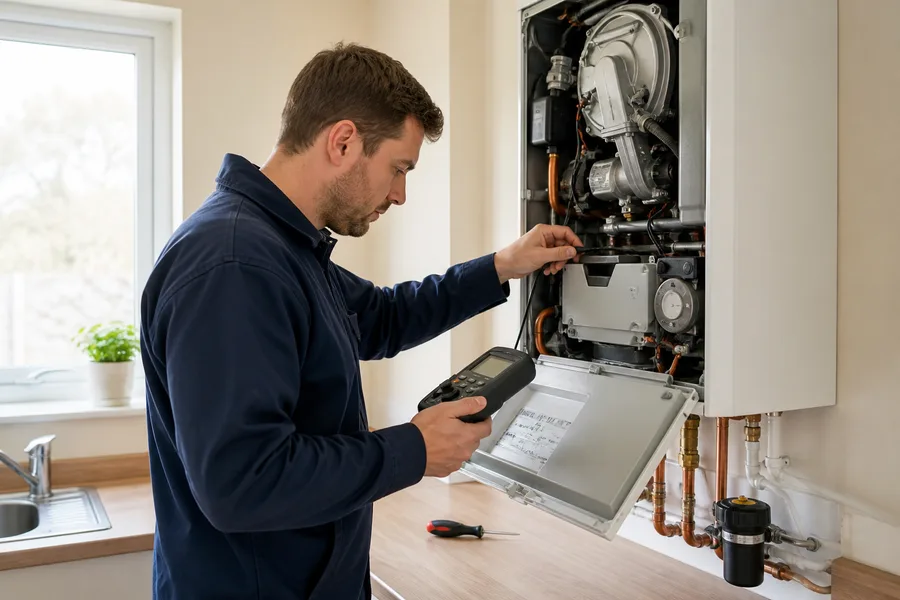
Arrange professional help when the issue repeats, needs regulated or specialist work, requires test equipment, risks further damage or remains unexplained after safe user checks. Describe the symptom without insisting on your own diagnosis. That gives the provider room to test the cause rather than simply sell the part or service you named.
A credible diagnosis connects test results and symptoms to a specific fault, distinguishes boiler components from the wider heating system and explains whether any further test is needed after the first repair. Expect the provider to distinguish confirmed findings, likely causes and remaining uncertainty. For a staged diagnosis, ask what each stage costs, what decision follows and whether the first payment is credited against the repair.
Do not keep resetting, restarting or using something that presents a safety warning simply to reproduce the fault. Avoid dismantling that creates new damage, wipes an error history or makes professional testing harder. Do not buy an expensive part from an online diagnosis before confirming compatibility and return terms. Equally, do not conceal a previous DIY attempt or temporary fix. Tell the heating engineer what was changed and when; accurate information is safer and usually shortens diagnosis.
Ask: What have you tested? What evidence points to this cause? Is there a smaller or safer first step? What is the complete price? What could change it? What happens if the proposed work does not solve the symptom? What paperwork and warranty will I receive? A confident professional can answer without pretending every unknown has disappeared.
Provide clear access, secure pets and valuables, keep relevant manuals or records available and tell the provider about previous work. Do not conceal an intermittent symptom or an earlier failed repair. Agree in advance who can authorise changes if you will not be present.
Keep the diagnosis, quote, invoice, test information and warranty together. Ask the provider to demonstrate normal operation and explain any monitoring or follow-up. If the symptom returns, record when and how it returned before changing anything. A useful record helps distinguish an unsuccessful repair from a different fault and makes warranty conversations more factual.
You can collect symptoms and make the safe user checks described above, but similar symptoms often have different causes. Avoid covers, safety devices, regulated work and speculative part replacement.
Use the warning signs above. In particular: If you smell gas, suspect carbon monoxide, see scorching, feel unwell around an appliance or a carbon-monoxide alarm activates, stop using the appliance, ventilate if safe, leave the area and use the official gas-emergency route.
Share the symptom, timing, model or system details, recent changes, photographs, access constraints and any immediate safety or damage risk.
Ask before work starts how diagnosis is charged, whether further testing is likely and what warranty applies. Keep the written diagnosis, invoice and evidence.
Use a clear description and compare providers with relevant experience for the actual problem.
Search local services