
How to choose a locksmith and check who you are calling
A practical checklist for comparing locksmith credentials, insurance, evidence, quotes and questions.
Loading page
A practical checklist for comparing locksmith credentials, insurance, evidence, quotes and questions.
Choose for the actual work, not the loudest badge or lowest headline price. Locksmith work includes non-destructive entry, failed multipoint mechanisms, cylinders, handles, alignment and security upgrades. The correct option depends on the door, fault and whether entry or permanent repair is needed.
Write a short brief covering the symptom or outcome, timing, postcode, access, known risks and relevant photographs. State what you do not know. Share the same information with each provider so that their scope and price can be compared.
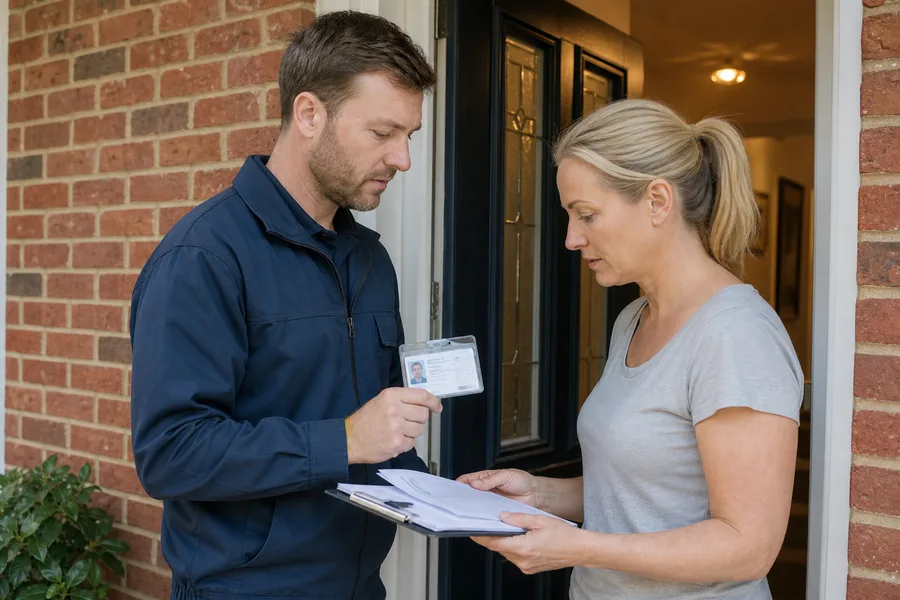
Confirm the legal or trading name, a usable address and telephone number, and who will attend. Check that the payment name and paperwork relate sensibly to the business. An online profile, advert or directory entry is a starting point, not proof that the person arriving is connected to it.
Locksmithing is not generally government-licensed in the UK. Check identity, a real trading address, insurance and independent trade-body membership where claimed. Verify membership directly rather than trusting an advert badge. Check a claimed registration with the issuing body using contact details you find independently. Confirm its scope, status and the individual where the scheme is person-specific. A genuine badge can still be used misleadingly if it covers a different trade or employee.
Ask what public-liability or professional cover applies and request evidence where the job risk justifies it. Insurance is not a competence certificate or automatic dispute guarantee. Look for recent examples involving the same type of fault, property, equipment or material, and ask what went differently on a difficult job.
Read for consistent detail: punctuality, diagnosis, changes to scope, care of the property, final price and response when something went wrong. A perfect score with little narrative is less useful than a mixed but credible history. Check dates and whether the reviewed work resembles yours.
Pause if the provider will not give a checkable identity, claims a credential but discourages verification, quotes an unusually low headline while avoiding the likely total, or insists that a large decision must be made immediately. Category-specific concerns include advertising implausibly low from-prices; using a call centre that pretends to be a nearby shop; drilling before attempting a suitable non-destructive method; changing the price after disabling the lock; refusing business details or demanding cash under pressure. None of these automatically proves dishonesty. Ask a direct question and judge the explanation, evidence and willingness to put important points in writing.
The quote should identify the parties, scope, labour, parts or materials, VAT, timing, exclusions, payment schedule, disposal, testing, paperwork and warranty. It should explain how unforeseen work will be approved. If two providers interpreted the brief differently, resolve that difference before comparing totals.
Who will attend and who supervises? What have you allowed for? What is excluded? What could change the price? What evidence will support the diagnosis? When is payment due? What documents and warranty will I receive? Who handles damage, delay or complaint? Ask for answers in writing where they affect the agreement.
A proportionate deposit may be reasonable for ordered materials or reserved time, but ask what it covers and the cancellation terms. Be cautious about large advance payments to an identity you cannot verify. Keep an invoice and payment trail; do not misdescribe a payment at someone else’s request.
Confirm the arrival window, who needs access, what should be moved or protected and who can authorise changes. Record the starting condition with proportionate photographs for higher-risk work. Make sure both sides have the same final scope and contact details. If circumstances on arrival are materially different, revise the agreement before tools, dismantling or treatment begin.
Inspect the result where practical and ask for operation, care or maintenance instructions. Keep certificates, part or material details, waste records, warranties and the final itemised invoice. If something is wrong, notify the business promptly in writing, describe the facts and give a reasonable opportunity to respond where appropriate. Do not let a minor snag become an undocumented argument.
VereLocal profile and verification signals are designed to give you more useful information, not to guarantee a provider, price or outcome. Check what a signal actually covers, review current details and agree the contract directly with the business.
For significant non-urgent work, two or three comparable quotes can reveal differences in diagnosis, scope and assumptions. One careful quote can be enough for a small routine job when identity and terms are clear.
No. Combine review patterns with identity, relevant credentials, insurance, comparable experience, written scope and your direct conversation.
No. A lower price can be efficient and fair. The risk is a price that cannot be reconciled with scope, materials, time or a clear business identity.
It depends on materials and booking commitment. Ask what it covers, when it becomes non-refundable and what happens if the provider cancels.
Use one written brief and compare relevant evidence, scope and total—not badges or price alone.
Search local providers